What polyurea brings to a floor system.
Polyurea is a family of coatings formed by a fast chemical reaction that produces a tough, elastic film. In industrial settings it is sprayed onto truck beds, tanks and roofs. In flooring, a modified, roller-applied form is used as a base coat that grips concrete and provides flexibility and impact resistance beneath the wear surface. When paired with a polyaspartic topcoat, it creates one of the most durable residential and light-commercial floor systems available.
Many garage coating failures come down to stress: concrete expands and contracts with temperature, cracks shift and impacts concentrate force on a small area. Rigid coatings can crack, chip or delaminate under that stress. Polyurea's flexibility allows it to stretch and recover, distributing stress instead of fracturing. That makes it particularly valuable in San Tan Valley, where slab temperatures can swing dramatically between night and a summer afternoon and expansive soils cause slabs to move.
Typical polyurea system
- Diamond-ground concrete with cracks and spalls repaired.
- Polyurea base coat that penetrates and bonds while adding flexibility.
- Optional flake broadcast or pigmented color layer.
- Polyaspartic topcoat for UV resistance, chemical resistance and gloss.
Why polyurea suits Arizona slabs.
Arizona concrete lives a hard life. It bakes in the sun, cools at night, absorbs moisture during monsoon storms and dries out again. Each cycle causes tiny movements. Over years, those movements can break the bond of brittle coatings. Polyurea is designed to tolerate that.
- Thermal flexibility. Handles expansion and contraction better than rigid epoxy.
- Impact resistance. Absorbs dropped tools, weights and equipment with less chipping.
- Strong adhesion. Bonds tightly to properly ground concrete.
- Fast cure. Shortens project timelines and enables one-day installations.
- Chemical resistance. Stands up to automotive fluids and common household chemicals.
For homeowners, the payoff is a floor that keeps looking good and stays bonded through many Arizona summers. For business owners, it means less downtime for repairs and a floor that handles heavy carts, tools and traffic.
Polyurea, epoxy and polyaspartic in one system.
Understanding how these three chemistries work together helps explain our recommendations.
Epoxy
Epoxy is rigid, strong and economical. It excels at building thickness and creating decorative effects, but it cures slowly and can yellow in sunlight.
Polyurea
Polyurea is flexible, fast-curing and impact resistant. It is an excellent base coat, particularly over slabs that experience temperature swings or minor movement.
Polyaspartic
Polyaspartic is a UV-stable, hard-wearing topcoat that cures quickly and resists chemicals and hot tires.
Putting it together
A polyurea base with a polyaspartic topcoat combines flexibility at the bond line with a tough, sun-resistant wear surface. This is the system we most often recommend for garages that see heavy use, workshops and slabs with a history of cracking.
Think of polyurea as the shock absorber and polyaspartic as the armor. Together, they protect the concrete and keep the floor looking new.
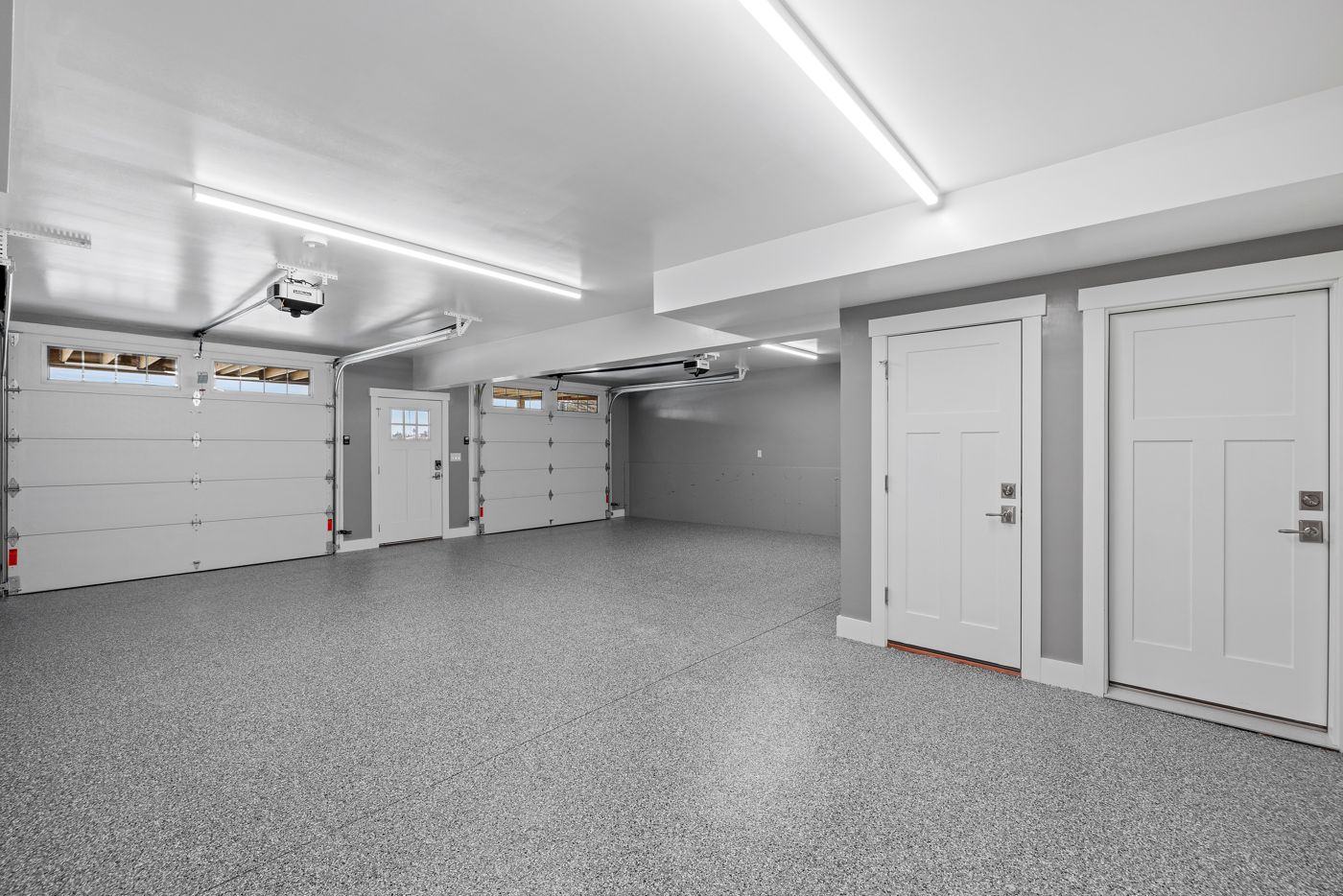 Polyurea base, polyaspartic top
Expansive soils, cracks and temperature swings.
Much of San Tan Valley sits on soils that swell when wet and shrink when dry. Combined with the extreme heat, this causes slab movement and cracking that is common in local homes. While no coating can stop a structural crack from moving, a flexible base coat is far more forgiving of minor movement than a brittle one.
During the floor visit we map cracks and look for signs of active movement, such as offset edges or cracks that have reopened after previous repairs. Static cracks are filled and coated over. Active cracks may be treated with flexible fillers and honored with a joint in the coating so the system can move without tearing. We explain these options clearly so you know what to expect over the long term.
How a polyurea system is installed.
Installation follows the same careful prep as all our systems: diamond grinding, crack repair and thorough cleaning. The polyurea base is applied in sections because it cures quickly, especially in warm weather. Flake is broadcast immediately if selected. After scraping and vacuuming, the polyaspartic topcoat is applied. Most residential garages are completed in one day.
- Clear the space completely before installation.
- Plan for vehicles to stay out for about 24 to 48 hours.
- Ventilation is provided during application.
Spaces that benefit most from polyurea.
Polyurea is a strong choice wherever a floor faces heavy use, impacts or movement. In San Tan Valley homes, that includes garages that double as workshops, home gyms with free weights, RV and toy-hauler bays, and golf-cart garages that see daily traffic. It is also a good option for garages with a history of cracking, where a rigid coating might telegraph or fracture over time.
In commercial and industrial spaces, polyurea base coats are used in auto service bays, fabrication shops, fitness studios, equipment rooms and anywhere tools or materials are frequently dropped. Its fast cure also helps businesses that need to minimize downtime. Outdoors, a polyurea base under a UV-stable topcoat performs well on patios, walkways and around pools, where daily temperature swings are severe.
Signs your slab is a good candidate
- Visible shrinkage cracks along joints and corners.
- Previous coatings that chipped or cracked rather than peeled.
- Heavy tools, weights or equipment used regularly.
- West-facing garage doors that let in intense afternoon sun.
Common myths about polyurea floors.
Because polyurea is newer to many homeowners than epoxy, a few misconceptions come up often during floor visits.
Myth: polyurea is just a marketing name for epoxy. It is a distinct chemistry with different properties. Polyurea is more flexible and cures much faster than epoxy, which is why it behaves differently under stress.
Myth: one-day floors cannot be durable. Speed comes from chemistry, not shortcuts. A properly prepared slab with a polyurea base and polyaspartic topcoat can be stronger and more resilient than many multi-day epoxy systems.
Myth: any polyurea is good polyurea. Product quality and installer skill matter enormously. Fast-curing materials leave little room for error, and poor technique can trap air, create uneven film builds or compromise the bond. Experience with these products in Arizona heat is essential.
Myth: polyurea does not need grinding. Every high-performance coating depends on mechanical preparation. Without grinding, even the best product will struggle to bond.
Deciding whether polyurea is right for your project.
Not every floor needs a polyurea base. For a lightly used garage with a sound slab and little sun exposure, a well-installed epoxy base with a polyaspartic topcoat performs very well and may cost less. Polyurea earns its premium when conditions are harsher: heavy impacts, frequent temperature swings, intense afternoon sun on the slab or a history of cracking and coating failures.
During the floor visit, we look at the age and condition of the concrete, how the space is used, how much sun it receives and whether previous coatings failed. If polyurea is the better choice, we explain why. If it is not, we tell you that too and price the alternative so you can compare. Our goal is to match the system to the floor rather than upsell a product you do not need.
What affects polyurea pricing.
Polyurea systems are a premium option because of material cost and the skill needed to apply fast-curing products well. Pricing depends on area, slab condition, the extent of crack repair, flake or color selection and topcoat options. We include all of this in a clear written quote, and we can price a polyurea system alongside an epoxy-based alternative so you can compare.
Caring for a polyurea floor.
Routine care is simple: sweep away grit, wash with warm water and a pH-neutral cleaner, and wipe up spills promptly. Use mats under tires in monsoon season and pads under heavy equipment. The topcoat can be refreshed in the future if heavy traffic areas begin to dull.
Polyurea Floor Coatings: common questions
Is polyurea the same as polyaspartic?
Polyaspartic is a type of polyurea with a slower, more controllable cure and excellent UV resistance. In our systems, polyurea is usually the flexible base coat, while polyaspartic is the UV-stable topcoat.
Will polyurea stop my slab from cracking?
No coating can stop structural movement, but polyurea's flexibility helps it tolerate minor movement better than rigid coatings. We repair cracks before coating and explain options for active cracks.
Is polyurea worth the extra cost?
For garages and workshops with heavy use, temperature swings or a history of cracking, many homeowners find the added durability worth it.
Can polyurea be used outdoors?
Yes, as a base coat under a UV-stable topcoat. It works well on patios, walkways and other exterior slabs.
How long does a polyurea system take?
Most residential garages are completed in one day, with parking typically allowed after 24 to 48 hours.
Does polyurea need to be top-coated?
In our floor systems, yes. Most polyurea base coats are not UV stable on their own, so we seal them with a polyaspartic topcoat for color stability, chemical resistance and gloss.
Can polyurea be applied in cold weather?
Yes. Polyurea cures across a wide temperature range, which makes it useful for winter projects when standard epoxy would cure slowly.