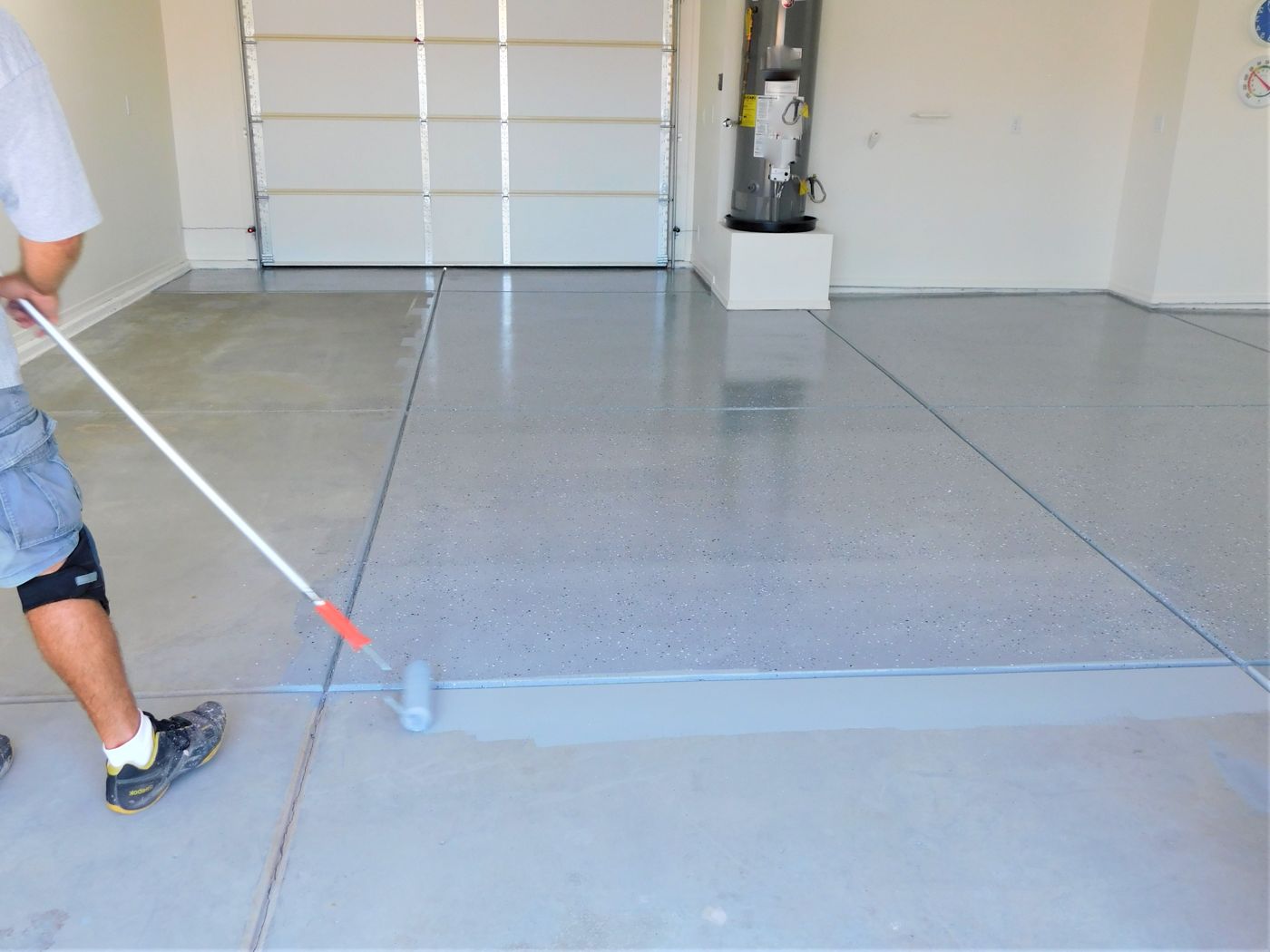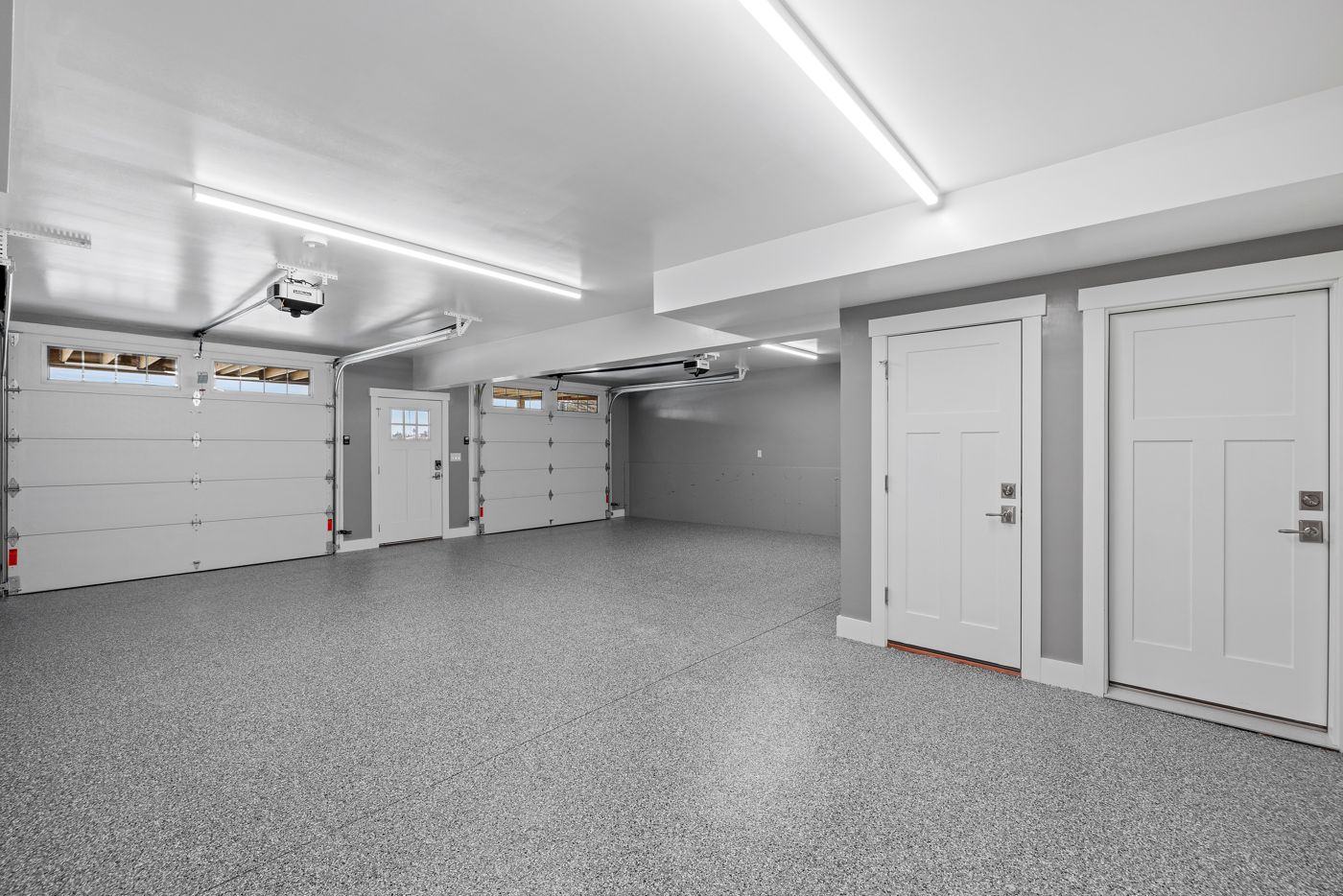
Industrial floors under constant pressure.
Warehouse and industrial floors carry an enormous amount of daily stress. Forklifts and pallet jacks roll back and forth, racking concentrates loads on small points, and dust, debris and spills are constant. Bare concrete under these conditions breaks down quickly. It dusts, wears, stains and develops damaged joints that create hazards and slow operations.
A warehouse floor coating protects the concrete and creates a durable, cleanable surface. It also improves safety and efficiency through better light reflection, clear markings and reduced dust. As industrial development grows around San Tan Valley, Florence, Coolidge and the Pinal County corridor, more businesses are recognizing the value of coated floors in their facilities.
Common warehouse applications
- Distribution and fulfillment centers with heavy forklift traffic.
- Light manufacturing and assembly spaces with equipment and workstations.
- Storage and self-storage facilities that want clean, durable floors.
- Agricultural and equipment buildings that handle machinery and chemicals.
- Flex industrial units used by contractors, fabricators and service companies.
Why coated floors improve warehouse performance.
A coated floor is more than a cosmetic upgrade. It supports safer, cleaner and more efficient operations.
- Dust control. Sealing the concrete stops dusting that can damage products, equipment and air quality.
- Abrasion resistance. Withstands forklift and pallet-jack traffic far better than bare concrete.
- Chemical resistance. Protects against oils, hydraulic fluids, fuels and cleaning chemicals.
- Improved lighting. Light-colored, reflective floors increase brightness and visibility.
- Safety markings. Clearly defined aisles, pedestrian walkways and storage zones reduce accidents.
- Easier cleaning. Smooth, sealed floors are faster to sweep and scrub.
- Professional appearance. A clean, bright floor makes a strong impression on clients and auditors.
For many operations, these benefits translate into lower maintenance costs, fewer equipment repairs and better workplace safety outcomes.
Warehouse coating systems and add-ons.
Warehouse floors require systems designed for heavy use. We tailor recommendations to traffic, loads and exposure.
High-build epoxy
Thick epoxy systems provide excellent abrasion and impact resistance for forklift traffic. They can be finished with urethane or polyaspartic topcoats for added wear and chemical resistance.
Urethane and polyaspartic topcoats
These topcoats add durability, chemical resistance and UV stability for areas near open dock doors.
Dust-proofing sealers
For budgets or areas that do not need a full coating, densifiers and sealers can reduce dusting and improve cleanability.
Joint repair and filling
Damaged control joints are a common source of forklift wear and product damage. We repair and fill joints with semi-rigid fillers that support wheels and protect edges.
Safety striping and markings
We install aisle lines, pedestrian walkways, forklift zones, stop bars and hatch markings using durable coatings, so markings last far longer than paint or tape.
Good warehouse floors combine the right coating, properly repaired joints and clear markings. Together, they reduce wear, improve safety and keep operations efficient.
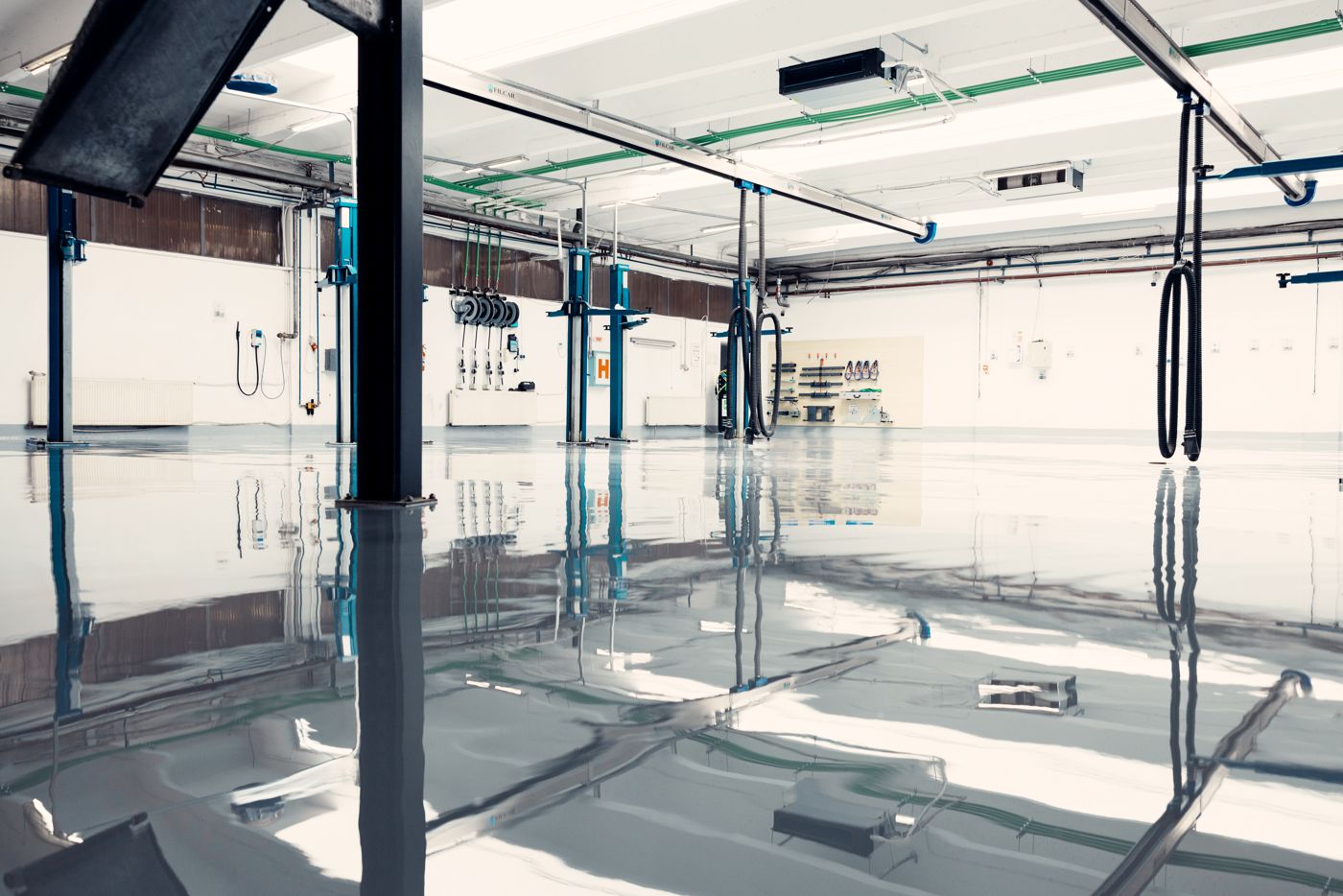 Industrial high-gloss system
Industrial slabs in Pinal County.
Many warehouse and industrial buildings in the area are newer tilt-up structures with large slabs and numerous control joints. Others are older buildings with worn surfaces, previous coatings or oil-saturated areas. We assess slab condition, joint condition and moisture levels before recommending a system.
Dock doors in Arizona create an additional challenge. Areas near open doors receive intense sun, heat and blowing dust. We recommend UV-stable topcoats near docks and textured finishes where moisture or debris may be present. Temperature swings inside non-climate-controlled buildings also influence product selection and scheduling.
Planning and installing around operations.
Warehouse projects require careful planning to minimize disruption. We work with your team to phase the work, often coating sections while other areas remain in use, and scheduling nights or weekends where possible.
- Site assessment: slab condition, joints, moisture, traffic patterns and markings plan.
- Preparation: shot blasting or diamond grinding, crack and joint repair, and cleaning.
- Coating: primer, high-build body coats and topcoats suited to traffic and exposure.
- Striping: aisles, walkways, zones and safety markings.
- Handover: cure schedule, return-to-service timing and maintenance guidance.
We coordinate with your operations manager to move racking or inventory in phases and keep critical areas open.
Designing an effective striping and marking plan.
Good markings make a warehouse safer and more efficient. Before installation, we work with your operations team to design a layout that reflects how people and equipment actually move through the building.
Elements of a striping plan
- Forklift aisles clearly separated from pedestrian walkways.
- Pedestrian paths connecting entrances, offices, break rooms and restrooms.
- Storage and staging zones that keep inventory organized and aisles clear.
- Hazard markings around docks, columns, equipment and electrical panels.
- Stop bars and crosswalks at intersections and doorways.
- Color coding for different zones, such as inbound, outbound, quarantine and returns.
Coated markings are applied as part of the floor system, so they last far longer than paint or tape and are easy to keep clean. If your layout changes in the future, we can add or modify markings without recoating the entire floor.
Joint repair, slab flatness and long-term performance.
In most warehouses, joints are where floors fail first. Every time a forklift crosses an open or damaged joint, the wheel strikes the edge, chipping away concrete and creating a deeper gap. Over time, this damages wheels and bearings, rattles loads, creates trip hazards and accelerates slab deterioration.
We repair spalled joint edges with high-strength repair materials, then fill joints with semi-rigid fillers that support wheels while allowing small slab movements. Joint repair is often one of the most cost-effective improvements a facility can make, whether or not the entire floor is coated.
We also evaluate cracks, surface wear and areas of heavy oil saturation, which may require additional preparation. In older buildings, we look for signs of moisture and previous coatings that must be removed. These details determine how well a coating performs over time, and we address them before applying a system.
Dust control and indoor air quality.
Unsealed concrete constantly sheds fine dust as forklifts and foot traffic abrade the surface. In a warehouse, that dust settles on inventory, packaging, racking and equipment, and it is drawn into motors, sensors and HVAC systems. In Pinal County, outdoor dust blowing through open dock doors adds to the problem, especially during monsoon season.
Sealing the floor with a coating or densifier stops the concrete itself from dusting and makes it much easier to sweep away the dust that blows in. Customers who store electronics, food-grade products, packaging or finished goods often notice an immediate improvement in cleanliness. Maintenance teams spend less time cleaning, and equipment filters last longer. For many facilities, dust control alone justifies the investment in a coated floor.
What affects warehouse coating costs.
Pricing depends on square footage, slab condition, joint repair, the coating system, markings and scheduling requirements. Phased or after-hours work, moisture mitigation and moving racking can affect cost. We provide detailed, itemized proposals to help you plan budgets and compare options.
Maintaining a coated warehouse floor.
Regular sweeping and scrubbing with neutral cleaners keep coated warehouse floors clean and bright. Address spills promptly, maintain forklift wheels to reduce wear, and inspect joints periodically. High-traffic lanes may benefit from a periodic topcoat refresh to extend the life of the system.
Warehouse Floor Coatings: common questions
Can you coat our warehouse while we remain operational?
Yes, in many cases. We phase the work, coat sections at a time and schedule nights or weekends to minimize disruption.
Will the coating hold up to forklifts?
High-build epoxy systems with durable topcoats are designed for forklift and pallet-jack traffic. Joint repair also helps protect the floor and equipment.
Do you install safety striping?
Yes. We install aisle lines, pedestrian walkways, forklift zones and other markings using durable coatings.
How long does a warehouse coating last?
Longevity depends on traffic, maintenance and the system selected. With proper prep and care, coatings can perform for many years, and topcoats can be refreshed in high-traffic areas.
Can you repair damaged joints?
Yes. We repair spalled joint edges and fill joints with semi-rigid fillers that support forklift wheels.
Can you just repair joints without coating the floor?
Yes. Joint repair and filling can be done as a standalone project and often extends the life of the slab and forklift equipment.
Can markings be changed later?
Yes. Markings can be added or modified later without recoating the entire floor, which helps when layouts change.
What colors work best for warehouse floors?
Light gray and other light, neutral colors are most common because they reflect light, make spills and debris easy to spot and help markings stand out. Darker colors can be used in specific zones to separate work areas.
Can you coat around existing racking?
Yes. We can coat around racking in place or phase the work so sections of racking are moved, coated beneath and returned. We plan the approach with your operations team during the site assessment.
Do coatings help with forklift tire marks?
Light-colored coatings can show tire marks, but they clean off much more easily than on bare concrete. Non-marking tires and routine scrubbing keep floors looking their best.